
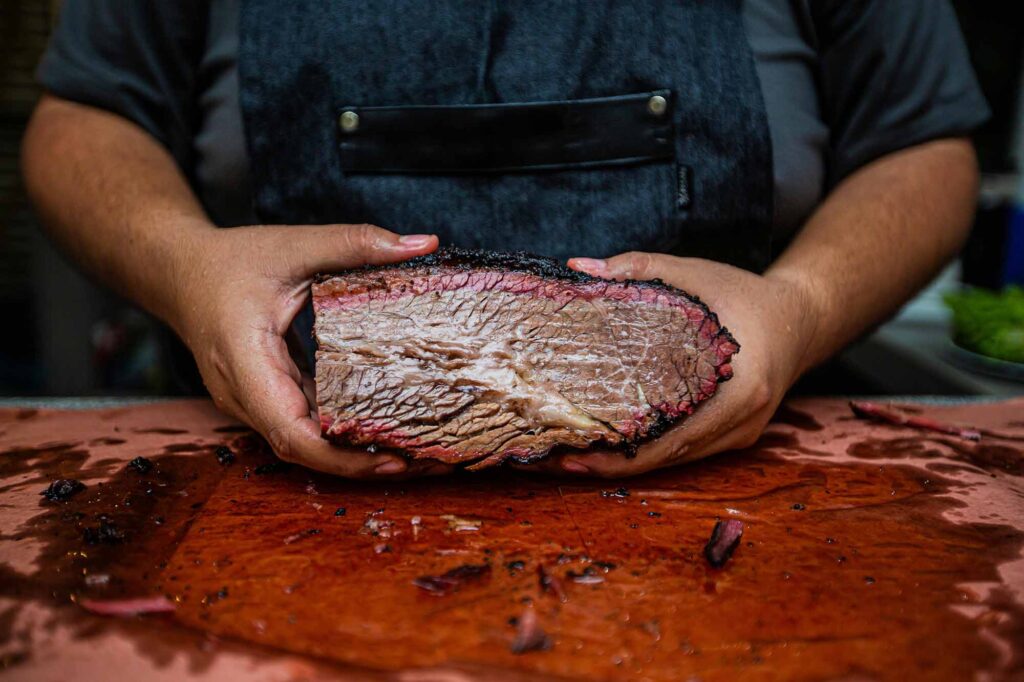
Douglas Brynes Wins Family Cookoff With Slow Smoked Brisket
Douglas Brynes had not set out that morning to conquer anyone. He rose with the sun as he often did, attentive to the weather, which spoke in the low language of drifting clouds and a wind that carried the memory of last night’s rain. The day of the family grilling competition had arrived, but to Douglas it was less a contest than an occasion—a chance to practice patience, to observe the quiet alchemy by which time and fire instruct the willing.
He stood in the yard behind the house, where the grass grew unevenly and the trees offered a counsel of shade. Before him sat the smoker, unadorned and honest, its metal bearing the scars of many seasons. Within it rested the brisket, modest in appearance yet vast in promise. Douglas had chosen it carefully, not from excess, but from a belief that abundance is best revealed through restraint. He had rubbed it with salt and spice the night before, then left it to contemplate its own becoming, as one might leave a book open to the page it is not yet ready to read.
While others in the family hurried—arguing over sauces, boasting of secret techniques, peering anxiously at their thermometers—Douglas tended his fire. He fed it slowly with oak, listening to the small declarations each log made as it surrendered to flame. Smoke rose in thin, thoughtful streams, wandering rather than rushing, as if reluctant to abandon the earth altogether. He adjusted the vents with the care of a man aligning his life to a principle rather than a schedule.
Time passed as it does when one is fully present: unnoticed, but not wasted. Douglas sat nearby, watching a beetle trace its determined path along a stone, hearing the distant laughter of children and the nearer sizzle of ambition from other grills. He lifted the smoker lid only when necessary, believing that too much inspection interferes with truth. What mattered could not be hurried, and what was hurried rarely mattered.
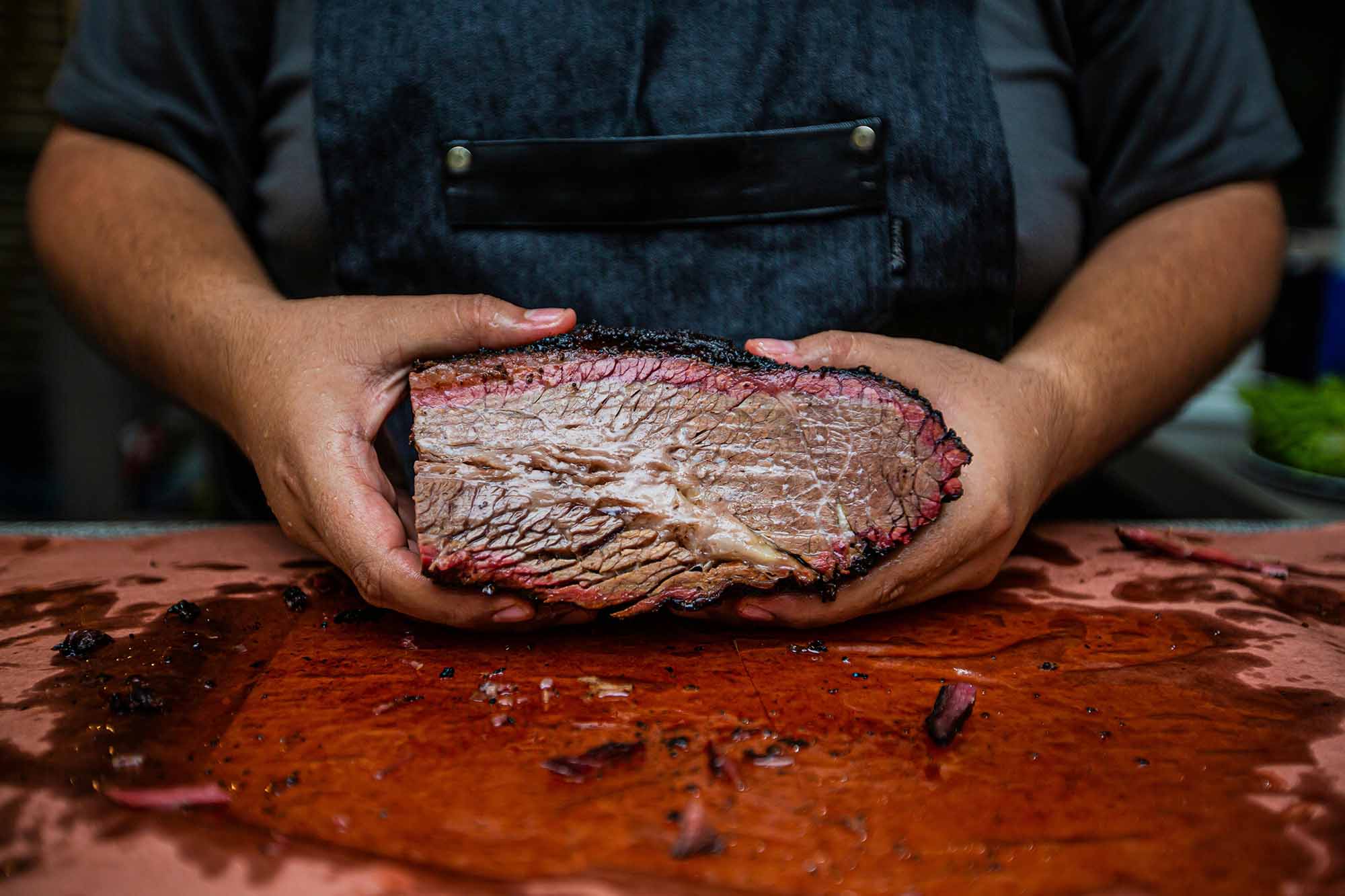
When the hour came at last, he removed the brisket and let it rest, honoring the silence that follows honest labor. The meat bore a dark, patient bark, its scent neither loud nor coy, but deeply persuasive. As he sliced it, the knife met just enough resistance to remind him that tenderness is not weakness, and the juices ran clear, as if relieved to be released.
The family gathered, judges in name only, for appetite has its own democracy. They tasted, and conversation paused. In that brief stillness, Douglas felt no triumph, only recognition: that he had listened well. The brisket spoke of smoke and time, of mornings begun without urgency, of fires kept small and steady. It spoke, too, of a man who understood that winning need not be declared, but simply shared.
When the verdict was announced, Douglas accepted it with a nod, as one might acknowledge a familiar truth. He looked across the yard, now softened by afternoon light, and thought that if a person learns to tend a fire, to wait without complaint, and to trust the quiet work of nature, he may find himself victorious more often than he ever intended.