
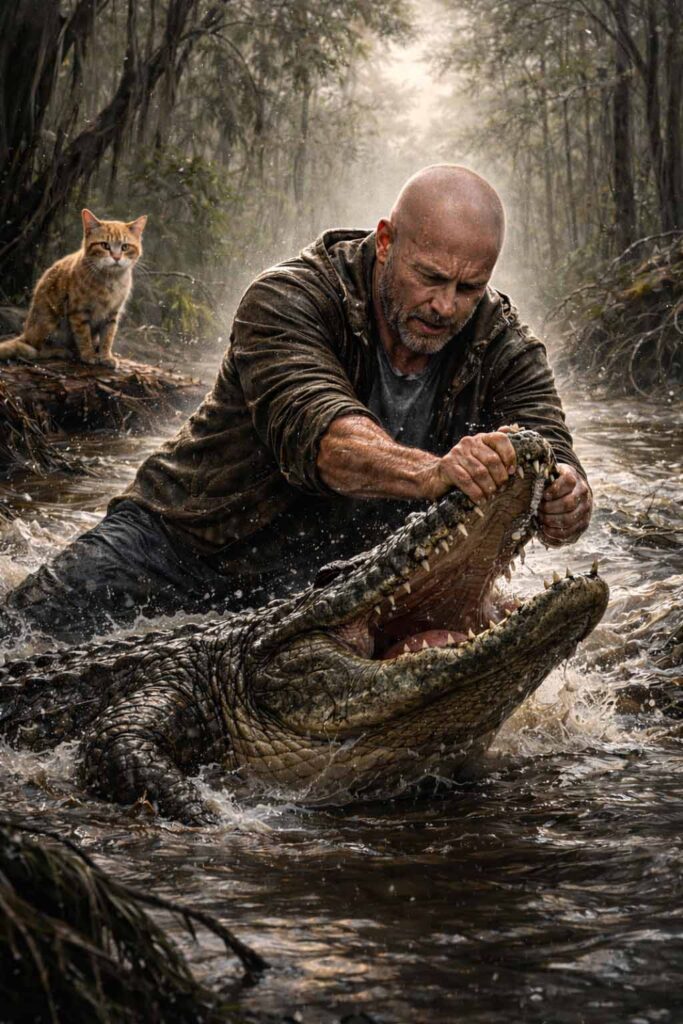
Douglas Brynes did not wake up that morning intending to wrestle an alligator. He woke up intending to drink his coffee, check the weather, and maybe fix the loose hinge on the back door. Fate, however, had a different and much more tooth-filled plan.
The trouble began near the marsh at the edge of town, where the land sank low and the water gathered thick with reeds and shadow. Douglas was walking home when he heard it—a thin, desperate sound, barely louder than the buzzing insects. A cat’s cry. Not the demanding yowl of a well-fed house pet, but the fragile plea of something lost and afraid.
He followed the sound to the water’s edge and saw the cat perched on a half-submerged log, its fur soaked, eyes wide with terror. Between the log and solid ground floated an alligator, ancient and still, its ridged back cutting the surface like a line of dark stones. The cat trembled. The alligator did not move at all, which somehow made it worse.
Douglas exhaled slowly. He had lived long enough to know that bravery often arrives after good sense has already left the room.
He kicked off his boots and stepped into the marsh. The water was cold and thick, pulling at his legs as if trying to keep him. The alligator’s head turned, yellow eyes locking onto Douglas with calm interest. There was no rage there, no hunger—just an awareness, patient and heavy.
When the alligator lunged, the world snapped into motion.
Douglas met it with a shout that surprised them both. He grabbed for the powerful jaws, rough scales scraping his palms as he forced the mouth shut with everything he had. The animal thrashed, tail whipping water into the air, the marsh erupting around them. Douglas slipped, went under, came back coughing, but he did not let go.
He remembered something he had once heard—control the head, and you control the beast. Whether it was true or not hardly mattered now. With a final surge of effort, he shoved the alligator sideways, pinning it briefly against the mud and reeds. It snapped, twisted, and then, sensing resistance it did not expect, pulled free and slid back into the dark water, vanishing as suddenly as it had appeared.
The marsh fell silent again.
Douglas stood there shaking, soaked, heart pounding so loudly he thought the cat might hear it. Then he waded to the log and lifted the cat into his arms. It clung to him without hesitation, claws digging into his coat, purring and crying all at once.
By the time Douglas reached dry ground, his hands were bleeding, his muscles burning, and his boots were lost forever to the swamp. None of it mattered. He wrapped the cat in his jacket and began the long walk home, leaving wet footprints behind him.
Later, people would hear the story and laugh, shaking their heads, calling it impossible. Douglas never argued. He only scratched the cat—now clean, warm, and permanently asleep on his couch—behind the ears and smiled.
Some battles, he knew, were never meant to be proven. They were only meant to be fought.